Auto Transport in Florida
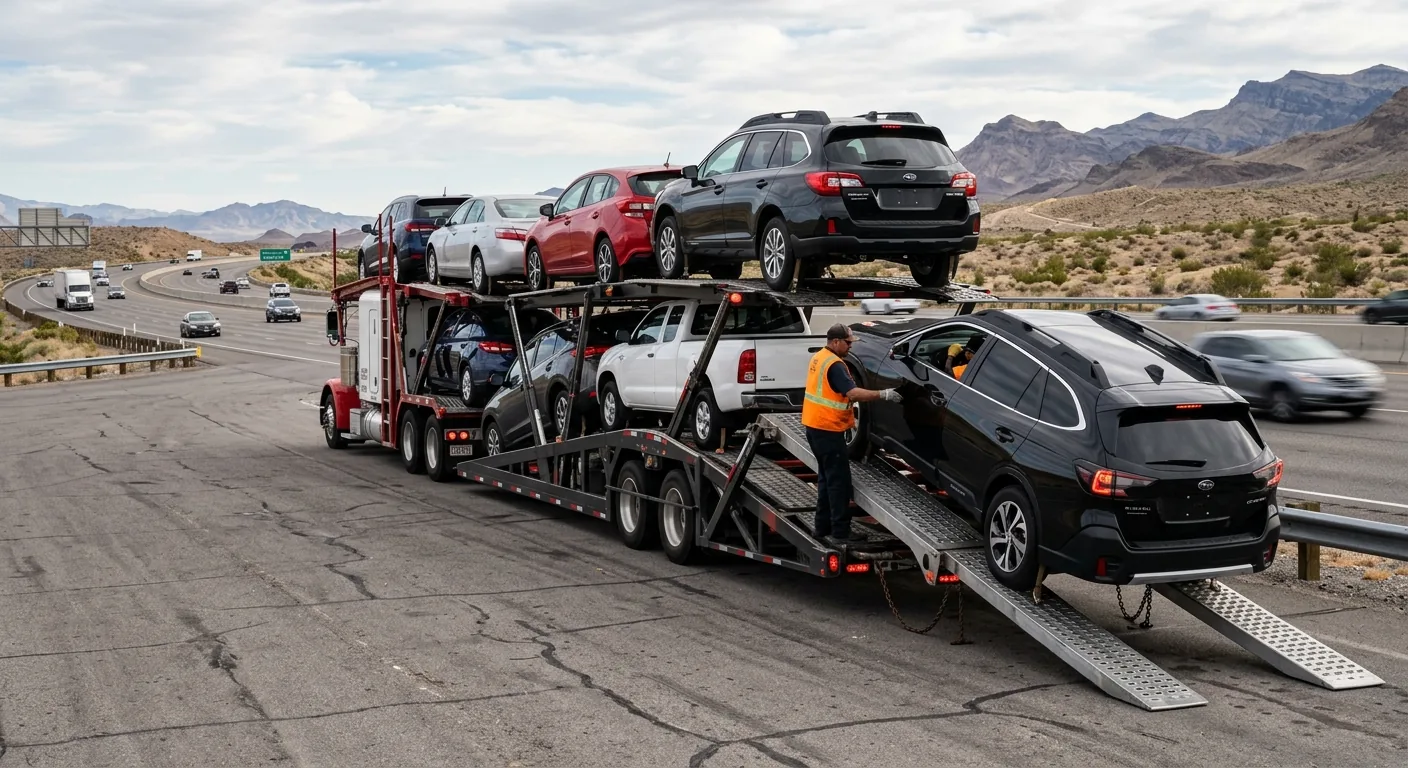
Vehicle shipping — open or enclosed carrier, door-to-door or terminal-to-terminal.
Get Free Quotes
Licensed FL movers for Auto Transport. No spam.
Avg Cost (FL)
$500–$1,800
full-service
Top Movers
5
reviewed & verified
Price Tier
$$
relative to other services
Real 2026 Auto Transport Cost Guide
Auto transport within Florida averages $300–$600. From Florida to the Northeast: $900–$1,400. To the West Coast: $1,200–$1,800. Enclosed transport adds 40–60% over open carrier rates.
| Scenario | Avg Cost |
|---|---|
| Within Florida | $300–$600 |
| FL to Southeast US | $600–$1,000 |
| FL to Northeast US | $900–$1,400 |
| FL to West Coast | $1,200–$1,800 |
What's Included in Auto Transport in Florida
✓ Included
- ✓ Vehicle pickup from origin address (door-to-door)
- ✓ Transport via open or enclosed carrier
- ✓ Delivery to destination address
- ✓ Basic cargo insurance ($100,000+ typically)
✗ Usually Extra
- ✗ Keys or personal items left in the vehicle
- ✗ Modifications or accessories (retract antennas, fold mirrors)
- ✗ Fuel (vehicle should be ~¼ tank)
- ✗ Any items stored inside the car
Florida-Specific Tips
- → Document your vehicle's condition with photos and video before handover — use the Bill of Lading condition report
- → Enclosed transport is strongly recommended for classic cars, luxury vehicles, and motorcycles
- → Allow 7–14 days for cross-country transport — weather and route conditions affect delivery windows
Top Florida Movers for Auto Transport
International Van Lines
Best Overall · HQ: Doral, FL
⭐ 4.8
2,847 reviews
Allied Van Lines
Best Nationwide Network · HQ: Westmont, IL
⭐ 4.5
12,400 reviews
North American Van Lines
Best for Large Homes · HQ: Fort Wayne, IN
⭐ 4.4
9,800 reviews
United Van Lines
Best for Cross-Country · HQ: Fenton, MO
⭐ 4.3
8,100 reviews
Mayflower Transit
Best Established Brand · HQ: Fenton, MO
⭐ 4.3
7,200 reviews
When Full-Service Is the Right Choice
Full-service auto transport makes the most sense in specific situations. Use this as a quick decision guide.
Moving 300+ miles away
Long hauls require professional logistics, weight estimates, and delivery coordination that DIY can't match.
You have fragile, high-value, or heavy items
Movers carry liability and bring the right equipment — dollies, padding, specialty crating. Worth it for antiques, art, or a piano.
Tight deadline (corporate relo, closing date)
Professional crews move faster. A 3-bedroom home that takes you a week takes a crew about 2 days end-to-end.
No reliable help for loading/unloading
A bad lift can injure you or damage doorframes. Movers are trained, insured, and equipped for it.
Moving to/from a high-rise, condo, or gated community
Most Florida buildings require licensed, insured movers. Many have elevator reservations and move-in windows that only pros can coordinate efficiently.
When DIY makes sense instead: Studio/1-BR local moves under 30 miles where you have friends to help and can rent a van for $100–$200 — the math often favors DIY if you're not moving specialty items.
How to Compare Auto Transport Quotes Apples-to-Apples
Getting 3 quotes is step one. Making sense of them is step two. Here's what to check before you sign anything.
- 1
Confirm estimate type — binding, non-binding, or not-to-exceed
Binding = price is locked. Non-binding = final bill can be higher than the estimate. Not-to-exceed = you pay the estimate or actual weight cost, whichever is lower. Always ask which type you're being quoted.
- 2
Check what's excluded from the base quote
Most quotes exclude packing labor, full-value insurance, stair fees, shuttle service, and specialty items. Get a written list of add-on fees before comparing totals.
- 3
Verify the mover is a carrier — not just a broker
Brokers sell your job to a third-party carrier you've never vetted. Ask directly: 'Will you be the carrier of record on my Bill of Lading?' If yes, verify their USDOT number at safer.fmcsa.dot.gov.
- 4
Compare delivery windows, not just pickup dates
Some movers offer a 7-day delivery window; others offer 21 days. For interstate moves, a wider window usually means your shipment is consolidated with others — slower but cheaper.
- 5
Get the valuation/insurance comparison in writing
Released value protection ($0.60/lb) is free but nearly worthless. Full value protection costs extra — usually $100–$300. Compare this across quotes and decide based on what you're moving.
Best Auto Transport Moving Services in Florida
Based on our scoring across pricing, reviews, licensing, and Florida-specific experience.
Best for Large Homes
Best for Cross-Country
Best Established Brand
Long-Distance Movers Near You
Florida's major metro areas each have a mix of national van lines, regional carriers, and local specialists. The right mover for your move depends on your origin city, destination, and home size.
Miami / South Florida
High demand year-round. Many moves go to New York, Texas, and the Carolinas. Book 6+ weeks out in Jan–Mar.
Find movers in Miami →Tampa / St. Pete
Growing hub for interstate moves to the Southeast and Midwest. Strong local mover competition keeps prices reasonable.
Find movers in Tampa →Orlando
Major origin for moves to the Northeast corridor. Theme park and hospitality industry drives a lot of relocation traffic.
Find movers in Orlando →Jacksonville
Popular for moves to Georgia, the Carolinas, and Virginia. Close proximity to the Georgia border makes some 'interstate' moves shorter than expected.
Find movers in Jacksonville →Fort Lauderdale
Active market, especially for luxury and high-rise moves. Expect specialty fees for condo buildings — elevator reservations required.
Find movers in Fort Lauderdale →Naples / Fort Myers
Growing snowbird exit market. Many moves go to the Midwest (Ohio, Michigan, Illinois). Off-season rates (May–Sep) can be 15–25% lower.
Find movers in Naples →Find Long-Distance Movers Near You
Browse movers by Florida city. Every mover listed has been verified for USDOT licensing and rated by real customers.